Sunday, 27 March 2011

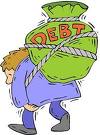
The Deficit - the truth - the horrible truth


The Labour party's most senior figures, in defiance of their education and intelligence, keep claiming that Chancellor Osborne's actions are "driven by ideology, rather than necessity". This is absurd. Anyone who argues that rapidly addressing the fiscal catastrophe Labour left behind is anything other than absolutely crucial either knows nothing about global bond markets, or is so blindly ambitious, so determined to close their eyes to the facts, as to be unfit for public office.

The UK's fiscal crisis is of monumental historic importance. The future of the free world may not be at stake as it was in Churchill's day. What is in the balance, though, is the prosperity of the British people for at least the next few decades and our status as a top-ranking nation.

Just before the Budget, we learnt that government borrowing jumped to £11.8bn in February 2011, up from £9.5bn during the same month the year before. This was the highest February borrowing total on record, double consensus estimates. As a result, official public sector debt now stands at £876bn, compared with £729bn at the same time in 2010.

Over the last 12 months, then, this country's "on-balance-sheet" liabilities have risen by £147bn. That's roughly what we spent on the NHS and defence combined in 2010 – and that was merely, during this last year of "austerity", the incremental increase in what Britain has put "on tick".

That's the point – and we should keep making it until it fully enters the public discourse. It is the total debt numbers that Osborne, the Tories and our politicians in general should focus on, not the size of the annual deficit.

The deficit is merely the yearly rise in the borrowing total that we need to service. By 2015, when the deficit is supposed to drop to zero, it doesn't mean that all outstanding debt will have gone away. It means, on the contrary, that total debt will have peaked.

What matters to the finances of any household is the size of the outstanding mortgage, the on-going costs of financing that mortgage, and the prospects of paying it off. Only an economically illiterate fool would claim the family finances will soon be "under-control" because sacrifices will be made and lifestyles reined-in to such an extent that, hopefully, if everything goes to plan, having re-mortgaged every year between now and 2015, that family will then enjoy a single year in which it won't need to re-mortgage.

In 2009, the UK spent £31bn – around 6pc of total tax receipts – on debt interest payments. That's money down the drain. By 2015, we won't have reached, in Churchill's words, some "broad sunlit upland". After four more years of deficits, debt services costs, according to last week's Budget, will by then be £67bn a year – or almost 10pc of total tax receipts. These shocking numbers are also likely to be under-estimates, given the UK's massive "off-balance-sheet" liabilities and the Treasury's benign assumption of future gilt rates.

Friday, 11 February 2011

Public Sector Pension Scandal


Economist Michael Johnson has warned that public sector pensions have become a ‘Madoff-style pyramid’.

In a report for the Centre for Policy Studies Johnson said public sector pensions were ‘collapsing under the weight of insufficient contributions, rising longevity and an ageing workforce’.

He said ‘self-sufficiency is the key’ and unless the issue was addressed Britain faces a ‘societal division’ between private pensions and the ‘disproportionately high pensions paid to high earners’ in the public sector.

Over three quarters of civil servants are in a final salary scheme compared with less than 20% of private sector workers. Currently taxpayers provide around 80% of all public sector final salary contributions and in 2009 the state paid £14.9 billion towards the £19.3 billion costs of the UK’s four largest civil service schemes.

Johnson predicted that in 2016 the taxpayer will have to contribute even more to make up the £10.3 billion shortfall in contributions.

He said the government should start closing final salary schemes in favour of defined contribution schemes. In order to phase this transition in Johnson recommended one of two paths; a ‘brave’ path or ‘cautious’ path.

The brave path would be a ‘watered-down [salary-based scheme] before the introduction of a pure defined contribution framework perhaps in 2020’ or a more cautious path of a career average scheme up to a salary cap of £38,000 with defined contributions above that.

Saturday, 15 January 2011

Wind Farms - A load of Hot Air??


There is a direct correlation between a lack of wind and cold weather. According to the Met Office, last month was the coldest December since records began a century ago. Last year as a whole was the coldest for 14 years.

On the coldest days of last month, when the need for power was at its greatest, there was virtually no wind, Britain's 3500 wind turbines were largely idle and almost no electricity was generated by them.

At 5.30pm on December 7, which National Grid says was the moment of the fourth-highest demand ever recorded in British history, wind contributed just 0.4 per cent of the country's electricity needs. The generation system coped – but it includes large numbers of old power stations that will soon be closing. In the future, under the far more wind-based system the Government wants to see, such levels of demand could turn out the lights.

"If, as government plans, we place too much reliance on wind, the electricity system will come under considerable stress, with very high prices, and even unscheduled interruptions, blackouts in the layman's terms,"

To avoid power cuts if the Government does go ahead with a mass wind-turbine programme, it will also need to build large numbers of new coal, oil or nuclear power stations for backup when the wind is not blowing. The cost of providing so much duplicate capacity is expected to dramatically increase electricity prices, with potentially serious effects on consumers and the economy.

Taxpayers' support for the wind industry itself would also rise, as private investors nervous about the lack of wind lose interest in the sector. Wind turbine manufacture has recently slumped and factories have been closed as demand has fallen, prompting calls for more public subsidy.

RenewableUK, the industry lobby body, insisted in response to our figures that the amount of electricity produced by wind had risen by a third in the last year and that electricity generated from renewables was at a "historic high." This, however, is because an increase in the number of wind turbines in operation, and not because of an increase in the amount of win

Thursday, 30 December 2010

Britain's Debt


Can you believe that the nation's debt rose by £32.4 million pounds in November. Our national debt now stands at £851 Billion pounds. The interest on this is £1,700 per second yet we still have people complaining about the Government having to make savings. Don't these people realise that the country is in a mess thanks to the wanton spending by Labour, Blair and especially Brown. Sure students may feel aggrieved that tuition fees are to rise, but who do they expect should pay for them, someone else it seems - Welcome to the real world!

Friday, 19 November 2010

Margaret Thatcher - A visionary


Today, Margaret Thatcher’s autobiography, first published in 1993, reads like a prophecy. It shows how deeply and with what extraordinary wisdom she had examined Delors’ proposals for the single currency. Her overriding objection was not ill-considered or xenophobic, as subsequent critics have repeatedly claimed.

They were economic. Right back in 1990, Mrs Thatcher foresaw with painful clarity the devastation it was bound to cause. Her autobiography records how she warned John Major, her euro-friendly chancellor of the exchequer, that the single currency could not accommodate both industrial powerhouses such as Germany and smaller countries such as Greece. Germany, forecast Thatcher, would be phobic about inflation, while the euro would prove fatal to the poorer countries because it would “devastate their inefficient economies”.

It is as if, all those years ago, the British prime minister possessed a crystal ball that enabled her to foresee the catastrophic events of the past year or so in Ireland, Greece and Portugal. Indeed, it is one of the tragedies of European history that the world chose not to believe her. President Mitterrand of France and Chancellor Kohl of Germany dismissed her words of caution. And when Mrs Thatcher was driven from office in 1990, a crucial voice was lost, and a new consensus started to form in Britain in favour of the euro.

This consensus stretched across the entire spectrum of the British establishment. It took in Tony Blair’s New Labour and all of Paddy Ashdown’s Liberal Democrats. The CBI came out for the euro, and so did the trades unions. The Foreign Office was doctrinally pro-single currency. Leading businessmen, such as Peter Sutherland (chairman of BP and Goldman Sachs International) and the fashion-conscious Richard Branson were strongly in favour. The Financial Times, a newspaper whose judgment has been wrong on every great economic issue of the last 40 years, was another supporter.

This consensus was all the more powerful because it contained Conservative grandees. The Britain in Europe campaign, featuring an ambitious young Liberal Democrat called Danny Alexander, now the Chief Secretary to the Treasury, was launched in 1999. Ken Clarke and Michael Heseltine treacherously spoke alongside Tony Blair and Peter Mandelson.

“The price we would pay,” announced Mandelson, “in lost investment and jobs in Britain would be incalculable.” He projected that “outside the euro, there is little we can do to protect industry against destabilising swings in the value of sterling.” Michael Heseltine spoke apocalyptically about the terrifying consequences for British competitiveness outside the euro. Chris Huhne, now a Lib Dem cabinet minister, was scathing about eurosceptics who warned that entry to the euro would cause the Irish economy to overheat – warnings that proved to be all too accurate.

Irishman Niall Fitzgerald, chairman of the industrial giant Unilever, forecast British economic obliteration outside the euro. In a dark irony, it is his native country that now faces obliteration. Those who challenged this consensus were ridiculed. Even William Hague, then leader of the opposition, received this contemptuous treatment. Hague made a series of speeches which, reread today, rival Margaret Thatcher’s in their prescience. He predicted that membership would “lead to huge booms and deep recessions”. Hague chillingly added that “the single currency is irreversible. One could find oneself trapped in the economic equivalent of a burning building with no exits.” He noted that euro membership could lead to a “full-blown banking and financial crisis.”

[Extract courtesy of the Dail Telegraph]

Wednesday, 17 November 2010

A reminder how we got where we are today!


In China, they have show trials. The Communist Party's disciplinary inspection group doesn't mess about. Those it suspects of involvement in bribery and corruption are ritually humiliated, forced to confess and shot.

The process is often put on video tape. Alleged culprits can be seen crying on cue, apologising to the people and reciting an ancient saying, the rough translation of which is: "One mistake and sorrow for a thousand years."

In Britain, we do things differently. Which is just as well for the nine bankers (seven Britons, one American and a Spaniard) who appeared before the Treasury Select Committee, accused of wrecking the economy. Had the inquiry occurred in Beijing, it is likely that firing-squad rifles would have been loaded even before the chairman's opening remarks.

For, in addition to destroying shareholder value and causing mayhem in the markets, bankers embarrassed the then Labour Government. By their folly, they have helped expose, albeit unwittingly, the ignorance of ministers, flaws in the Financial Services Authority and impotence at the Bank of England. This will never do. What's more, they have established beyond dispute the Prime Minister's inability to pick a winner. Or, put another way, the Curse of Brown.

The Prime Minister's choice of banker to compile a report on ideas for improving public health was Sir Derek Wanless. This is the same D Wanless who was a Northern Rock director when it spontaneously combusted in 2007.

Then came Sir James Crosby, the former HBOS chief executive, who was asked by Downing Street to look at how the mortgage market might be made more effective. More delicious still, he was appointed to the board of the FSA. Yes, the very same J Crosby who resigned after becoming embroiled in the who-said-what-to-whom row over failings of risk management at HBOS.

When it comes to coincidences, the French believe "jamais deux sans trois". And blow me, Glen Moreno was forced out of his job as chairman of UK Financial Investments Ltd – the company set up to oversee the taxpayer's stake in the bailed-out banks – because of his links with a Liechtenstein trust accused of tax evasion.

Had the issues not been so serious, Bankers on Trial would have made a jolly soap opera for enthusiasts of courtroom dramas. As it was, episode one turned into a depressing spectacle. Lord Stevenson and Andy Hornby, both formerly of HBOS, and their counterparts from RBS, Sir Tom McKillop and Sir Fred Goodwin, apologised profusely without ever appearing to have understood what went wrong, how it went wrong, or why it went wrong.

The growth of unsustainable borrowing did not happen overnight. Debt, vast unmissable mountains of it, had been building up on the balance sheets of consumers and companies for years. The banks had it shipped to their customers in pantechnicons. As long as it seemed that interest charges were being serviced, debt-delivery lorries kept arriving. Repayment in full of the monies lent was for wimps. Kidology became a currency of conviction.

One did not need fancy banking qualifications to work out that such an accumulation of credit would eventually destabilise irresponsible borrowers and reckless lenders. A little common sense and a sub-GCSE command of adding-up were all that was required to identify looming disaster.

Banking, when done properly, is a simple business. It requires the banks to ask just three questions:

1. What is the borrower's ability to repay?
2. What is the borrower's willingness to repay?
3. What are we going to do if he doesn't repay?

It's now clear that for much of the dodgy business done in sub-prime markets – mortgages for people on welfare – the answers to these questions were: don't know, haven't a clue and write off billions.

For policy-makers, Bankers on Trial provided a welcome distraction from a rapidly deteriorating economy and the emergence of the D word in polite society. Paul Krugman, professor of economics at Princeton University and Nobel prize-winner, wrote recently, "this looks an awful lot like the beginning of the second Great Depression".

Such a prospect could not be accepted, at least not in public, by Mr Brown. He clung to the fantasy that, thanks to his genius of administration, British citizens were far better placed than competitors to handle a battering.

Bit by bit, however, the credibility of that claim is being pulled apart by brutal facts, not least of which was the Office for National Statistics' revelation that while the number of foreign workers getting jobs in the UK continues to grow (up by 175,000 to 2.4 million last year), domestic unemployment is rising sharply. According to Business Monitor International, a research company specialising in country risk, "Britain is facing an unprecedented fall in its economic world ranking… from 12th place in 2007 to 21st in 2010".

Its report, Britain on the Brink, says the UK economy is sliding out of the global premier league: "Despite enjoying 11 years of growth between 1997 and 2007, the UK ran a budget deficit of 1.7 per cent of GDP over this period, fuelling a fiscal time bomb. Faced with the financial burden of bailing out the banking sector and kick-starting the economy, the budget deficit will swell to an unsustainable 9.3 per cent of GDP in 2009."

The scale of our problems was at last recognised by the Bank of England, which has been way behind the curve in forecasting the speed and depth of recession. Mervyn King, the governor, whose style of communication is that of an Oxbridge professor addressing a village idiot, is preparing the way for unconventional measures to turn back the tide.

"It is at this point," as Orwell wrote, "that the special connection between politics and the debasement of language becomes clear." For when the Bank talks of "quantitative easing", what it really means is printing money: increasing the amount of paper stuff swishing through the economy. You get more, I get more and, in a flash, we'll all be millionaires.

You can see where this is going. From here, all roads lead to Harare.

Tuesday, 16 November 2010

Media Royal Frenzy


Why oh why does the media go completely overboard just because William proposes to Kate. OK so it's a royal wedding, but does it need so much coverage. Most people do not care that much, all we need to know is the fact that they are getting engaged and married sometime next year. End of - full stop. Instead they even extend the bloody news programmes and roll out numerous nondescript royal correspondants to pontificate over absolutely nothing.

Friday, 10 September 2010

Labour Lies


Let us explode the falsehood once and for all that Mrs Thatcher was responsible for closing all the coal mines. The largest number of closures by far, 93 pits closed under Labour's Harold Wilson during the 1960's. The next highest closure period took place during the Labour Government of Jim Callahan during the 1970's. Mrs Thatcher took office in 1979 and during her period of office only 22 pits closed.

Tuesday, 25 May 2010

Gordon Brown


How did the Labour party manage to acquire as many seats as they did in the election. The scale of mismanagement of the economy and the astonishing level of waste paid for by the taxpayer is just unbelievable. Why did the North East of England return so many Labour MPs, even in North Tyneside where Byers the outgoing MP (taxi for hire) was even suspended from the Labour party. It beggars belief that some voters can be so stupid to try to re-elect Labour. We will be paying for years for Labour profligacy, and Brown must surely go down as one of the worst Prime Ministers in history.

Thursday, 2 July 2009

Stupid Policeman lets Police Dogs die in car


How can this happen, a policeman being so stupid, careless and thoughtless that his two police German shepherd dogs die in a private vehicle outside Nottinghamshire's Police Headquarters in temperatures up to 82%F.

And what is the response of the police? Chief Supt Ak Khan said everyone on the force's Dog Section had been devastated by the incident. "We will certainly take any lessons we can get from this process and make sure we put them in place so this sort of thing never happens again," he said.

Well one lesson would be to ensure that this man is prosecuted for causing unnecessary suffering to an animal and is dismissed from the police force.

The maximum sentence for causing unnecessary suffering to an animal is six months in prison and a £20,000 fine, and it seems entirely appropriate that this is served on this moronic individual.

Thursday, 7 May 2009

Cycling Policemen - or not!


What on earth is the world coming to, PC Tony Cobban (on left of picture) would not sit on a bike for a publicity photo at the launch of a police crime awareness campaign because he had not passed his cycling proficiency test. ( normally sat by children)

His useless excuse was that he was being cautious because he had not passed his proficency test. In this day and age you have to cover all bases - it's the way of the world.

So it's quite possible that if you are unluckly enough to be mugged when PC Cobban is on patrol, the chances are that he won't intervene because he may to complete a risk assessment determining if his self defence training is adequate.

How a jobsworth or someone as stupid as him is actually employed as a policeman is beyond belief.

Saturday, 2 May 2009

So called Traffic Calming & Road Markings

What on earth is happening to our roads & streets, everywhere you go there are speed humps, chicanes and more white and yellow paint than Picasso used in a lifetime. Why do we have speed humps, they cause damage to suspension and tyres on cars, they affect ambulances, police and fire engines reducing the response times to incidents.

What is with these chicanes where cars are drawn together and priority is given to vehicles in one direction. They are dangerous, visitors are unsure of who has priority and the holdups cause both frustration and excess CO2 emitted by stationary vehicles. Note: a vehicle is at its most in-efficient when idling.

Road markings are everywhere, hatchings at junctions, bus lanes where few buses are actually seen, no car lanes ( who can go in a no car lane and why?). Worst of all bus lanes in place at off peak hours, no conformity - in Leeds bus lanes only operate weekdays from 7am to 9pm, and 5pm until 7pm, in Newcastle bus lanes operate all day until 7pm. Bus lanes that change without warning, hatched crossings where it is near impossible not to get trapped within.

Stupid changes to lanes, more signs than than a deaf and dumb conference and a more confusing picture for motorists than an abstract painter on LSD.

Trying to find your way around a place you are unfamiliar with, is hard enough, doing so while adhering to these ridiculous 'rules' make it nearly impossible.

Enough is enough!! At least London are experimenting with the removal of traffic lights, as when they break down, the traffic rate increases.

Why do they have traffic lights all day on some roundabouts, they are only needed during peak times, and they may not be needed at all if the experiment in the previous paragraph proves correct.

Thursday, 23 April 2009

Carrier Bags from Marks & Spencer

Why do M&S insist on charging for carrier bags, no other major supermarket does. If I go to a town centre, the last thing I want to do is carry a bag, or a collection of carrier bags. The madness is that the last time I went into M&S I bought over £30.00 of food for which I had to buy two carrier bags, but the £3.50 T/Shirt I bought was placed into a free carrier bag. Beats me!

Grant Bovey & Anthea Turner


Don't you just love it when two people are obviously made for each other, Grant is a complete and utter moron and Anthea really is a stupid cow ( to coin a phrase first used on Hell's Kitchen). To be fair I can put up with Anthea's vacant and self important airs, but Grant has the kind of face you would never tire of punching, not that I would advocate such an action, but the phrase does sum up the inherent dislikeability he seems to conjure up.

Why have they not paid part of their fee money from Hell's Kitchen to those businesses who are owed money when Bovey's companies went into liquidation. He now has the cheek to set up new companies to profit from other's misfortune.

Should people who run companies who go bust owing thousands, not be allowed to run new companies until those old debts are repaid, they should be debarred until creditors agree compensation terms. Do the right thing Grant, pay those small companies with your fee money.


Speed Limits

The absurd view that all we need to do is to reduce speed limits and then road deaths will fall is missing the point. Accidents are primarily caused by bad driving, speed in itself is not the issue. Every day I see examples of people driving carelessly and badly. You see people in front of you coming up to a roundabout, they stop and then look to see if anything is coming, why don't they look before they get to the roundabout, if nothing is coming then they can feed into the roundabout and keep the traffic flowing. Another annoyance are people who join a main road from a slip road, often they do not get up to speed and rather than filter into the traffic, thay just indicate as if they have a god given right to join my lane, forcing me to take avoiding action. Bad driving, poor anticipation and a lack of car control are all more important issues than speed. Why not revert to a man with a red flag walking in front of a car - that would stop deaths, well apart from men carrying red flags that is.

Monday, 20 April 2009

Television News

Why do these bulletins, especially regional TV, report as news, obscure events that simply are not news. And why do they insist on asking what the viewers think. I could not care less what some ignorant chav thinks, so why take up news time for this, or is it a way of cheaply filling time.
Why is there so little business news, no wonder we seem to underachieve as a nation, if so little emphasis is placed on it.